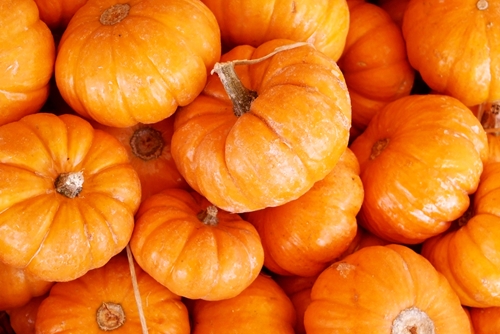
Pumpkins are an important part of many cultures' fall celebrations. People want pumpkins for everything from pies to doorstep decorations, making commercial pumpkin farming a profitable industry.
The types of pumpkins or other fall gourds grown determine the pests that can affect them. Some of the most common types of pumpkins in the U.S. include cucurbita maxima, cucurbita moschata and cucurbita argyrosperma. All trace their roots back to North America and northern South America. Cucurbita moschata are the picturesque Jack-o-Lantern pumpkins, but have a variety of other styles as well. Also, pumpkins are vining fruits like watermelons, which changes the pests that find these plants attractive.
Humans are not the only ones who love these autumn gourds. Insects, molds and diseases are also attracted to these orange fruits. To keep their industry profitable and deliver picturesque, tasty pumpkins, many farmers turn to chemical pesticides to reduce the damage of these pests. Whether you are a farmer, a chemist, a pesticide engineer or just a researcher who loves carving Jack-o-lanterns, explore some of the most common pumpkin pests and which chemicals can help dispatch them.
Phytophthora blight
Phytophthora blight occurs frequently, contributing to a 1A Four-star rank. The USDA North Central Region IPM Center pointed to this as one of the most serious diseases that can affect pumpkins. It is caused by phytophthora capsici, which comes from spores in the soil. The spores are plentiful and invade easily, making control of this disease difficult.
Phytophthora blight can rot seeds, roots, vines, leaves and the fruit itself. Lesions in the vines and leaves may be signs of phytophthora blight, which can lead to crown or total fruit rot. Phytophthora blight may lead to total crop loss and can be financially devastating.
There are a number of chemicals and pesticides that can be used during the planting process and afterward to combat this damaging condition, the USDA North Central Region IPM Center explained. Mefenoxam works well as part of a seed treatment to prevent this blight, while it is also effective for use later on. Dimethomorph, cymoxanil and famoxadone, and chlorothalonil and mefenoxam are all rated as good against this disease. Crop rotation and not using pond water for irrigation are also recommended for avoiding this condition.
Squash vine borer
The squash vine borer looks similar to a wasp and uses pumpkin vines as larval incubators. They lay eggs in the pumpkin's vine, causing wilt and rot. Rick Weinzierl, extension entomologist from the Department of Crop Sciences at the University of Illinois, recommended that farmers look for these pests as soon as the pumpkins begins vining. Unlike most moths, the squash vine borer is out in the daytime and can be spotted through small holes in the vine.
"Treat when first damage is noted and again about a week later," Weinzierl wrote. "Several insecticides are effective for vine borer control, including Capture (bifenthrin), Sevin (carbaryl), Asana (esfenvalerate), Pounce (permethrin), and Ambush (permethrin) … At the small scale, mounding soil around the base of vines can encourage adventitious root growth from portions of the vine beyond the point of vine borer damage."
Squash bug
Weinzierl noted another common insect that can wreak havoc on pumpkins: The squash bug. These pests "move in" to pumpkins in June and July, laying eggs on the leaves. They can cause serious destruction to single plants or entire crops depending on their number. The most destruction may be caused by yellow vine disease, which can be spread through squash bug bacteria.
It is optimal to use pesticide when the nymphs or young squash bugs hatch, about 6 weeks after the eggs are laid. Capture's active ingredient bifenthrin is great for treating these pests. Asana and Pounce are also effective, as is Sabadilla, which is sold outside the U.S.
Viruses
Viruses are among the most common and difficult problems to manage while growing pumpkins. Typical pumpkin viruses include the Squash Mosaic Virus, Papaya Ringspot Virus, Cucumber Mosaic Virus, Watermelon Mosaic Virus and Zucchini Yellow Mosaic Virus – all of which can affect pumpkins and other plants that they are not named for.
Unfortunately, there are no pesticide solutions to treat these viruses directly. Fungicides, bactericides and pesticides are useless against the actual viruses. The best defense against these is to use pesticides against cucumber beetles, which can carry the viruses. Sevin (carbaryl), Furadan (carbofuran), Capture (bifenthrin), Asana (esfenvalerate), Danitol (fenpropathrin), Ambush (permethrin), Pounce (permethrin), and Admire (imadacloprid) are all rated as good pesticides against cucumber beetles.
Weeds
Pumpkins, like most crops, are not just under attack from bugs, mold, bacteria and viruses, they can also be hurt by weeds such as carpetweed, horseweed, giant ragweed, lambsquarters and many others, the USDA North Central Region IPM Center explained. Roundup (glyphosate) and Sandea (halosulfuron) are commonly used and effective chemicals for dealing with a variety of weeds.
To get a great looking or tasting pumpkin into your home, there are a number of obstacles that need to be overcome including weeds, disease, bugs and other pests.