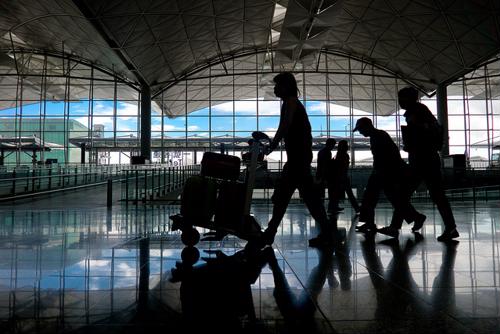
In a move designed to improve public health, U.S. Senator Kirsten Gillibrand of New York is bringing attention to the use of per- and polyfluoroalkyl substances (PFAS) chemicals that can often be found at airports. Gillibrand points out that these chemicals can easily find their way into the local water supply, WAMC reported. Without action, she believes that people are at risk of exposure.
Why are airports using PFAS chemicals?
While PFAS chemicals can be found in a variety of products, Gillibrand points out that one of their main uses is in the firefighting foam used in airports. In fact, up until the FAA Reauthorization Act passed in October 5, 2018, airports were required to use these compounds to put out fires.
The reason for this is that PFAS foams are the best material to squash out-of-control fires. Airplanes use a specific fuel that is extremely flammable, and once it catches fire it can be extremely hard to put out. While other firefighting chemicals do exist, PFAS-based solutions have been widely adopted as the best. However, the danger they cause to the average person has put them out of vogue, and people like Gillibrand are moving to find better ways to contain a blaze.
What are PFAS?
PFAS are chemicals that are not found in nature. These man-made mixtures have been around in the U.S. since the 1940s, according to the EPA. During their lifespan, PFAS were considered safe and therefore found their way into a variety of products. We’ve since come a long way in understanding what they do, but they can sadly still be observed in many areas of life.
For instance, the EPA states that you can find PFAS chemicals in nonstick products, such as Teflon. Many pots and pans are produced with a Teflon coating, which can quickly expose humans through cooking. Other household items such as wax and paints can also contain PFAS.
However, perhaps the most dangerous part about PFAS is that they can easily accumulate in a water supply. A manufacturer or waste treatment center can bring PFAS into the groundwater without even realizing it, and it would be extremely hard for a local community to know about it until it was too late.
In fact, this is the problem Gillibrand has with the use of PFAS firefighting foam. These compounds are used liberally when putting out a blaze, and airports have quite a lot of ground surface for the chemicals to seep into. What’s more, an airport’s repeated use of the chemical will only allow for a continual accumulation, as PFAS don’t break down over time.
How does PFAs affect human health?
Clearly, PFAS chemicals have found their way to a large part of modern human life. However, humans interact with a variety of chemicals every day that don’t harm them. What makes PFAS harmful is how they can seriously affect a person’s health.
To begin, the EPA states that PFAS are known to cause tumors in animals. PFAS are actually linked to cancer as well. On top of this, these chemicals have a way of messing with a child’s development. They can cause low infant birth weights, developmental issues, and can lower an immune system’s ability to fight infection. Most consistently, the EPA has found that PFAS lead to increased cholesterol levels among humans who have been exposed.
However, something else to consider here is the fact that PFAS quickly accumulate in an infected person. Much like the groundwater, the human body simply cannot break down PFAS in a timely fashion. That means that it will take a long time for a person to be able to rid their body of these chemicals, and adverse effects can linger for extended periods.
As it stands, the PFAS that Gillibrand seeks to ban is a solid firefighting solution. However, the evidence shows that these chemicals can easily find their way into drinking water. Once its there, scientists know that it won’t break down, which means its only a matter of time before it reaches a nearby population. Every chemical serves a purpose, but that doesn’t mean any solution is worth an increase in the number of sick people.