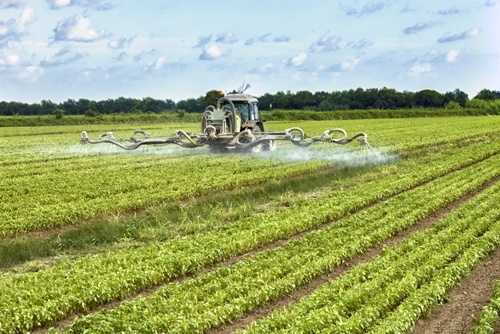
Approximately 2.5 million people work on farms each year, handling hundreds of thousands of crops, and exposing themselves to several dangerous pesticides. Yet these workers aren't always protected. Instead, it's quite the opposite. Farm workers file several lawsuits each year because they were harmed by pesticides. Even more wind up in a medical facility or hospital because they experienced pesticide poisoning. However, despite the attention surrounding pesticides, there seems to be little attention on pesticide safety and handling tips. Luckily, these policies may be changing, thanks to one farm worker.
Juan Fernando Rodriguez Tellez was a Minnesota farm worker who had an odd thing happen to him. One day in the field, while puling up corn husks, his hand went numb. Tellez had been sprayed with pesticides, and didn't realize that his exposed fingers were susceptible to being harmed by the insect-killing chemicals. A few years later, Tellez took his story to the leaders of the Environment Protection Agency. The group was shocked by Tellez's tale, immediately believing that change was needed to help him and other farm workers work more safely in the fields.
Spreading the word
Tellez didn't stop there. After his scarring incident, he didn't want others to have the experience that he did. However, many do – there are approximately 20,000 pesticide poisonings each year, and many more that go undocumented. Tellez brought his story to Capitol Hill, where he looked to have stricter enforcement of the Agricultural Worker Protection Standard. The policy, which was first implemented in 1992, helps protect farm hands from getting poisoned by these dangerous chemicals. However, despite its existence, the law has done little to keep farm workers out of danger.
Of course, Tellez was looking to change this rule's importance. He and 200 fellow farm workers shared their powerful stories related to pesticide poisoning and sickness, arguing that the lack of safety surrounding the chemical's distribution was leading to lost productivity and continuous medical bills. In the past, many of these workers were afraid to speak out because they thought they might lose their jobs.
However, Tellez noted that improper handling of these chemicals can cause sickness and even death. He noted that the policy should include an age restriction to keep the chemicals away from children. He also believes there should be safety guidelines that teach farm workers how to safely dispose of their gloves and protect their clothing so they don't bring these chemicals home to their their families. Elderly family members and infants might not do so well if exposed to the harsh pesticides.
Luckily, thanks to Tellez and hundreds of his farm working friends, the EPA is finally making changes. The advocacy organization Earthjustice filed a legal petition in 2011 with the EPA demanding safety changes and updates to their old policy on pesticide changes. After three years of meetings and deliberations, the FDA announced its set of changes to the old rule. Yet the rules weren't good enough, and Earthjustice and several farm workers stood outside the offices and demanded that the new policies be strengthened.
After continued meetings, the EPA released a set of updated policies in September 2015 that the farm workers and Earthjustice agreed with. All of the new regulations largely protected workers and their families from being exposed to pesticides. Some of the new rules included:
- All pesticide handlers must be 18 or older.
- Make the pesticide safety trainings longer and more in-depth.
- Hold new safety trainings every five years, even for current employees.
The rules themselves are more comprehensive and are also available in several languages that are easy for workers from any country to understand. Luckily, these are federal regulations, which means states need to enforce them too. However, generally speaking, states actually provide considerably better protection for state farm workers than the government might. Yet proactive training is needed at every level to make sure that farm workers are safely using these dangerous chemicals.
Pesticide safety tips
There are some basic tips to help people properly use these pesticides. These include:
- Know your chemicals: Only look for pesticides that can kill insects at certain reproduction levels. There are some insecticides that are incredibly harmful for humans to use and shouldn't be used around people in any capacity. Do your research to find out what you're looking to kill off and what will be the most effective, as well as what will be the safest to handle.
- Look at the label: The label can often tell you a lot about the product you're using. It might be able to tell you how to mix the product with water, the proper clothing to wear as well as the active chemicals in the substance that can pose a danger to people. Labels will often provide basic directions for usage as well as proper storage techniques. Even if you've used this product before, it's best to use the label as a guide to get a refresher on safe handling and pesticide distribution.
- Wear the right clothing: Before using the dangerous substance, it's important to make sure you have on the right clothing and protective gear. That includes wearing goggles, gloves, long-sleeved shirts, pants and socks. No bare skin should be exposed, as it could be susceptible to harm. Workers should also wear durable masks, not cotton ones that allow some dust to get in.
- Use proper distribution tools: Make sure you have the correct sprayer to distribute these pesticides. If you have to create the substance yourself, make sure the tools you use are strictly for mixing pesticides, nothing else.
These simple tips and solid safety policies can help farm workers everywhere handle pesticides safely.