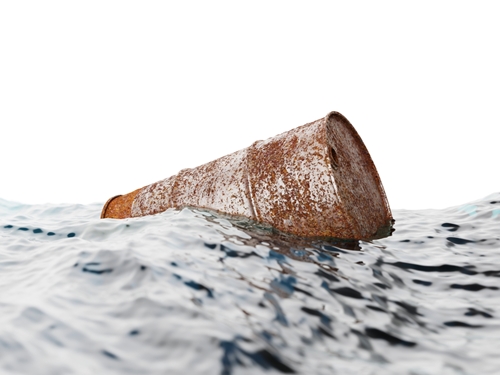
As a result of the increased rigor of regulations from the Environmental Protection Agency over the past decade, the chemical industry in the U.S. has advanced considerably in its safety procedures – certainly by comparison to the 1990s and earlier. Nevertheless, massive contamination incidents with industrial chemical compounds as their culprit still occur from time to time, due to lapses in compliance and, in some cases, outright criminal behavior.
During the first week of October, federal and state officials discovered two new instances of severe toxicity in Michigan and California. Both of these pose clear and present risks to vegetation, plant and animal life in their immediate vicinity, and in the latter case, a substance illegal for use in the U.S. is involved. Meanwhile, in Crosby, Texas, the fallout from Hurricane Harvey's flood-borne damage to the Arkema chemical plant continues without a clear resolution in sight, with new toxins identified as having spread through the surrounding countryside, increasing health risks to residents.
Illegal drug production operation poisons California land
Lassen National Forest, not far from San Francisco, is considered one of the Golden State's most stunning nature preserves. However, CBS News reported Oct. 2 that it had become home to a massive marijuana-growth operation, likely run by one of the Mexican drug cartels that operates prominently in California. As U.S. Forest Service personnel discovered, the cultivation plant's workers used pesticides illegal (for most uses) in the U.S., like carbofuran. This substance, in particular, is lethally toxic even in the smallest amounts, and authorities found it infused within the Lassen soil in significant amounts.
Working together with private-sector hazardous materials experts, Forest Service agents and other law enforcement personnel are working to conduct an environmental impact assessment and mitigate the toxicity as much as possible. However, carbofuran and similar substances are being found at a vast majority of cartel-connected grow sites. Time noted that despite California's legalization of recreational marijuana in 2016, the law doesn't fully go into effect until January 2018. Thus, organized crime operations may attempt to produce and sell as much marijuana as possible before its legal accessibility will decrease profitability for black-market sellers – raising the risks for civilians in their vicinity.
Speaking to CBS News, Dr. Mourad Gabriel, an agent for the nonprofit Integral Ecology Research Center, didn't mince words when explaining the dangers of carbofuran: "An eighth of a teaspoon would kill a 300-pound black bear."
Arkema incident's dangers not over yet; residents suing
The Associated Press reported that 15 residents of Crosby, Texas, and its general vicinity, filed a class-action lawsuit against chemical firm Arkema Oct. 3. Plaintiffs and their legal counsel claim that debris flung for miles or carried by the wind after the Arkema plant's explosion – which was caused by Harvey's flooding – have sickened them and poisoned their plants and overall environment. They also stated that testing conducted in the area can confirm their conclusions and show the presence of organic chemicals known to be carcinogens. This attempt at civil action is not connected to an earlier suit brought against Arkema by two dozen first responders and landowners from the area, but the previous plaintiffs made similar claims. The Harris County district attorney's office has also announced an Arkema lawsuit.
For its part, Arkema said in a statement that its own testing hadn't revealed significant toxicity to meet the state's environmental regulatory threshold for noncompliance. Yet both groups of plaintiffs show consistency in the signs and symptoms they reported: Strange black ashes and viscous substances are cited in the legal documents for each case, along with painful respiratory issues and rashes.
Flint River again affected by industrial waste
According to another AP report, the Department of Environmental Quality in Michigan stated Oct. 4 that runoff from an industrial electroplating facility in the city of Lapeer had contaminated the Flint River. Though this occurred while Flint and other nearby cities continue dealing with the lead poisoning that left millions without drinking water and caused a significant number of Legionnaire's disease cases, DEQ officials don't believe the two incidents are connected.
Nevertheless, regulators immediately began working with the facility's staff to identify and quell the source of leaking waste due to the dangers it posed. DEQ identified the chemicals as perfluoroalkyl and polyfluoroalkyl substances, which don't naturally degrade and thus can accumulate quickly to poison fish, wildlife and, eventually, humans.