Cannabis can have many benefits and as it becomes more legalized across the United States the industry is starting to be held to quality control standards. Like any growing industry though, there is still a lot of room for growth regarding safety and testing. For example, if medical cannabis was put into the same bucket as other pharmaceuticals, every batch would be tested for potency and purity, but that is not always the case.
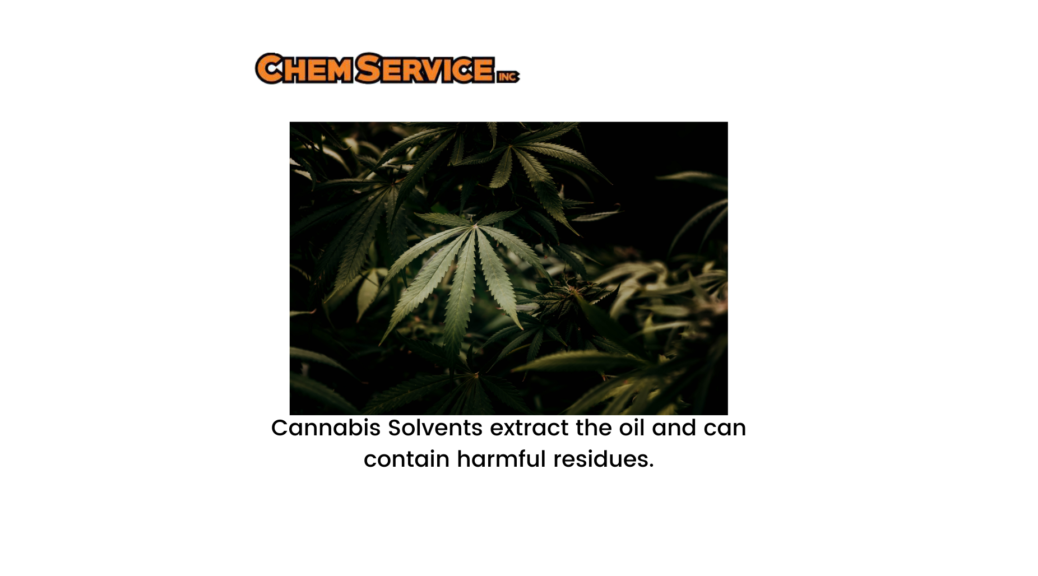
During the cannabis extraction process to create concentrations for recreation, food, pharmaceuticals and personal care items, solvents and other hydrocarbons can be used that contain potentially unsafe residues. Testing cannabis for both medical and recreational use varies from state to state, but it is important to test for residual solvents that can be potentially harmful to users.
What are the Active Chemicals in Cannabis?
Cannabis is derived from a complex plant called hemp, or Cannabis sativa. The most known active ingredient is THC, or delta-9-tetrahydrocannadinol, that is found in the leaves and flowering parts of the plant and is responsible for the behavioral influences of marijuana. The other common active ingredient is cannabidiol which is related to diet, energy utilization and pain sensors. The structure of the chemicals are very similar, but their effects are quite different.
What are Cannabis Oil Solvents?
When utilizing a solvent to extract cannabis oil it is intended to evaporate, but sometimes the evaporation process does not remove all of the solvent and it remains in the final product. Solvents are separated into 3 categories: Class 1 (volatile solvents to avoid), Class 2 (suspect solvents to limit) and Class 3 (safe solvents to use).
Some common residual solvents to test for include:
| Acetone (Class 3) | Heptane (Class 3) |
| Acetonitrile (Class 2) | Methanol (Class 2) |
| Benzene (Class 1) | Pentane (Class 3) |
| Chloroform (Class 2) | Toluene (Class 2) |
| Ethanol (Class 3) | Triethylamine (Class 1) |
Can you Make Cannabis Oil Without Solvents?
There are many ways to make cannabis oil without the use of harmful solvents. A solventless, or mechanical extraction, can be used and does not require chemicals to achieve the final product. When small hair-like growths (trichomes) are rubbed or pressed from the plant, it results in a concentrate known as kief. Ice water extraction can also be using to make kief which is then pressed into bubble hash. These processes leave more of the original cannabinoids intact that are normally altered from the use of solvents and can be tried safely at home.
What is a Cannabinoid Profile?
Cannabinoids are chemical compounds produced by cannabis flowers that mimic the effects of endocannabinoids. These chemicals are naturally produced in the human body to help us maintain homeostasis.
A cannabinoid profile informs consumers about the concentration of active cannabinoids in their product. Cannabinoids can help with a variety of things such as pain, nausea relief, preventing nervous system degeneration, and reducing seizures and convulsions, so this profile aids processors, physicians and consumers in understanding the potency of cannabis products and when assessing which product is best suited for the patient’s needs.
How do you Test Cannabis Oil?
There are no strong regulations or guidelines currently in place about how cannabis is tested and measured making it even more important to test cannabis at home. To get an accurate determination of solvent residuals in a cannabis sample a chromatography should be used. This test provides high accuracy that users can depend on.
Analyzing Cannabinoids using Chromatography
Chromatography plays a vital role in the purification and testing of cannabis products and can be tightly linked to cannabis safety. This testing process is helpful to accurately measure the levels of cannabinoids and terpenes while also checking for potential contaminants such as pesticides, heavy metals, and residual solvents.
Chem Service Provides Residual Solvents for Testing the Safety of Cannabis
Chem Service has recently launched residual solvents that test the safety of cannabis products. Through our years of experience with chemical testing, we have curated residual solvent mixes for those across the United States and additionally for those who live in California, Oregon, Florida, and Canada.
Click over to our ‘Residual Solvents’ page for more information on the Chem Service options or call our seasoned staff at 1-800-452-9994 to discuss any questions you may have and how we can best help with your needs.
Sources
- Admin, ACS. “Potency Testing.” ACS Lab Cannabis, 10 Mar. 2021, acslabcannabis.com/services/lab-testing/potency-testing/.
- Berger, Fred K. “Substance Use – Marijuana: MedlinePlus Medical Encyclopedia.” MedlinePlus, U.S. National Library of Medicine, 10 May 2020, medlineplus.gov/ency/patientinstructions/000796.htm#:~:text=Marijuana%20comes%20from%20a%20plant,parts%20of%20the%20marijuana%20plant.
- Dr. Adie Rae, Ph.D. “Why Does Cannabis Need To Be Lab Tested?” Weedmaps, 16 Sept. 2020, weedmaps.com/learn/the-plant/does-cannabis-need-to-be-tested.
- Kangiszer, Gyula. “The Importance of Chromatography for Cannabis.” Marijuana Times Cannabis News, 17 Feb. 2021, www.marijuanatimes.org/the-importance-of-chromatography-for-cannabis/.
- “Residual in Cannabis Solvents.” Ellutia, www.ellutia.com/wp-content/uploads/2016/11/Residual-Solvents-in-Cannabis-digital.pdf.
- “Residual Solvent Testing And Analysis – Modern Canna Science.” Modern Canna | MCS, www.moderncanna.com/cannabis-testing/residual-solvent/.
- Rubin, Eugene. “The Other Active Ingredient in Marijuana.” Psychology Today, Sussex Publishers, 5 June 2018, www.psychologytoday.com/us/blog/demystifying-psychiatry/201806/the-other-active-ingredient-in-marijuana.
- Team, NuggMD. “Six Ways to Make Cannabis Extracts & Concentrates: Which Is Best for You?” NuggMD, 15 Jan. 2021, www.nuggmd.com/blog/cannabis-extracts.