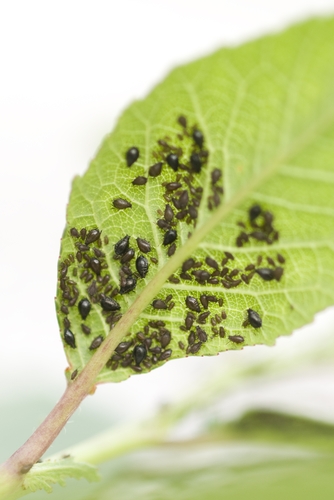
Aphids don't look like much to the untrained eye. Small, soft and almost completely transparent, these insects seem harmless. But as experienced farmers know, what these pests lack in size, they can make up for in number. Large groups of aphids can ruin a crop by causing significant damage and rot in a plant's leaves. These pests also leave a waste substance behind called "honeydew," which can develop into mold and cause further damage to crops. Cereal crops such as wheat are among the most at risk to these insects.
Aphids come in a variety of species throughout the world, affecting different crops and regions. For example, diuraphis noxis is known as the Russian wheat aphid, while sitobion avenae is called an English grain aphid, each name based on their regions and crops.
Aphids are unpredictable, making them difficult to prevent or protect from. Additionally they reproduce rapidly, with the females able to reproduce asexually. The best method for preventing complete crop destruction for many farmers is by using pesticides to stop the aphid infestation and reduce a future threat of mold damage, rot and the risks caused by these pests.
Aphid pesticides
These insects aren't easy to get rid of. Not all pesticides can exterminate aphids, and often the effectiveness of a chemical compound comes down to timing and application rather than chemistry. Aphids need to be directly contacted by most pesticides that are effective against their spread, and they should be found early. Farmers need to keep an eye out on the underside of vulnerable crops for the wingless aphids before they boom in population and ruin the crops.
Pesticides are often sprayed onto these crops, but different chemicals work well for different plants and different aphids. For example, fatty acid salts are generally effect against aphids on leafy plants while malathion, chlorpyrifos, and acephate work better for trees. Some people opt for oils or soaps as treatment instead.
Because aphids are so tough to get rid of, the University of Arizona explained that sometimes combinations of older pesticides, such as orthene, endosulfan, metasystox-R, dimethoate and pyrethroids, may be a superior way to go. However, when creating these combinations, ensuring purity and correct mixtures through standards testing could be critical.
The University of Kentucky's College of Agriculture, Food and Environment reminded farmers that carbaryl should not be used on aphids because it can be much more detrimental to predator insects than aphids, creating a gap that lets the aphid population explode without any natural control.
By attacking aphids with pesticides early, before they have a chance to grow in population and maturity, farmers can keep their crops protected and ready for their eventual harvest.