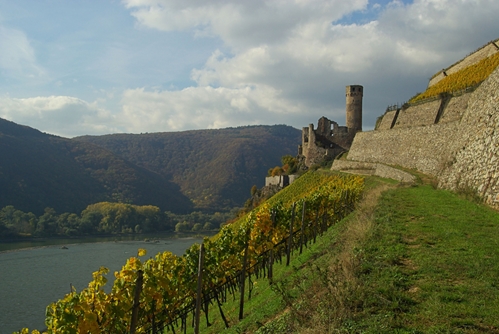
Whether you’re growing grapes for wine or for food, using the right pesticides are a key component in keeping insects, weeds, mites and mold from ruining your crop. Take a look at some of the most common grape pesticides and learn which is right for your vineyard, whether large scale or hobby-sized.
Fungicides
Black rot, downy mildew, powdery mildew, bitter rot, phomopsis and botrytis are among the most common and disastrous fungi that can destroy a grape harvest, the University of Purdue explained.
Purdue recommended spraying various chemical fungicides throughout the year to keep your grapes fugus-free. A broad-spectrum fungicide like mancozeb should be used early on in the season, when the vines first sprout. Throughout the season, while the plants are blooming, people should use strobilurins and sterol inhibitors, such as Nova, Rubigan, Bayleton, Abound, Sovran or Flint.
The rest of the year, Purdue suggested using products based on weather while also scouting for mildew incidents.
Meptyldinocap is a recent dinitrophenol fungicide that’s an effective tool against mildew and mold on grapes and their vines as well as gourds and watermelons. Produced by Dow AgroSciences, this chemical is used all over the world to treat vines, including in the U.K. Although, it has not been approved by the U.S. Environmental Protection Agency. This fungicide is effective against powdery mildew.
Insecticides
The Japanese beetle, grape berry moth, grape root borer, grape phylloxera and grape leafhopper are among the most damaging insects to grape plants. If you find a European grapevine moth, SF Gate recommended that you contact your local university for pet control assistance, typical pesticides may not work. Otherwise, there are plenty of insecticides designed for safe use on grapes.
Imidacloprid is one of the most common insecticide chemical compounds, with about half of all grapes having a trace of the popular insect neurotoxin. However, the Pesticide Action Network Pesticide Database explained that sulfur is the most used pesticide for fungus and insects. For example, in California in 2003, more than 20 million gross pounds of sulfur were used for grape pesticide.
There are a wide range of grape pesticides, however, including carbaryl, esfenvalerate, spinosad, permethrin, malathion and pyrethrin, SFGate pointed out.

Herbicides
Any plant that grows on a grapevine, other than grapes, is a weed, Purdue explained. This includes bushy perennials, grasses and broadleafs. Oryzalintrifluralin, simazine, norflurazon, diuron, oxyfluorfen, isoxaben and pendimethalin are among the best pre-emergence weed killers for grapevines.
Glyphosate, carfentrazone and glufosinate are broader spectrum weed killers that you can use throughout the year, Purdue explained. The university also emphasized a knowledge of pesticides and proper usage for maximum efficiency and minimal pollution.
Miticides
SF Gate noted that in addition to insects, the European red mite, Willamette spider mite, Pacific spider mite and two-spotted spider mite can also wreak havoc on a vineyard. These tiny pests can discolor grapes and stunt shoot growth, as well as leave behind holes in the leaves and plenty of webbing. There are an array of ways to treat a mite problem though, SF Gate explained.
“Miticides used to combat mite problems include organic options such as soap and oil sprays as well as commercial products containing propargite, fenbutatin oxide, fenpyroximate, pyridaben or abamectin,” the website outlined.