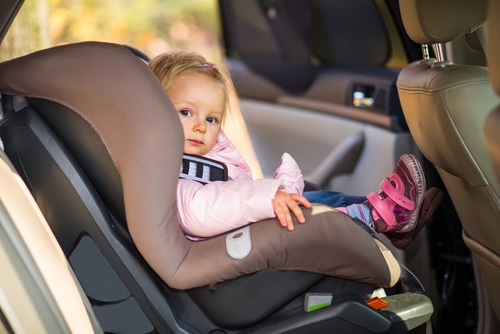
Recently, news came out that many of the leading car seats in the U.S. are made with chemicals that are flame retardants and have been tied to negative health claims. However, these car seats may not have any health consequences to the children who sit in them and still offer the best defense against car accidents for children.
Car seat study
The study that found chemicals in car seats was conducted by Michigan-based environmentalism nonprofit organization the Ecology Center and its website HealthyStuff.org. Researchers from the organization tested 15 2014 models of car seats using gas chromatography and mass spectrometry searching for non-halogenated organophosphate flame retardants and halogenated flame retardants,such as bromine and chlorine. The study was not published in a peer-reviewed journal and did not disclose funding, based on a press release.
Those who tested the car seats found that 73 percent had halogenated flame retardants and more than 50 percent had at least some non-halogenated organophosphate flame retardants. The Ecology Center called both types of chemicals hazardous in the press release. The release warned that because these chemicals are added they release over time and put children at risk through contact or inhalation.
The "Graco, My Size 65" and "Baby Trend, Hybrid 3-in-1" were rated as the worst car seats because of their chemical components. "Britax Frontier and Marathon" and "Clek Foonf" were rated as the top two car seats for having the fewest of these chemicals and for having companies working toward phasing the chemicals out, the release noted.
Criticism of the study
Since the Ecology Center published its press release, a number of news sources wrote subjects on the story. Some of these outlets were critical of the findings and what they actually mean to children and parents.

In an opinion article for Forbes magazine, contributor Carrie Lukas explained that just because certain chemicals were used in a product doesn't automatically make it dangerous to those who use it.
"There is absolutely no reason to believe that our babies and toddlers are somehow going to ingest or absorb dangerous amounts of chemicals from the cushioning or plastic in their car seats, anymore than we should worry that they will successfully gnaw off splinters from our dining room tables," she wrote.
She continued to advise parents not to worry about these findings unless babies started eating their car seats.
ConsumerReports offered a more balanced approach. It called the findings "troubling" and noted that the discoveries of lead and chromium in the car seats might be more concerning than the other chemicals.
The source also pointed out that some of these chemicals have been tied to health concerns and suggested parents vacuum regularly to cut down on dust in the car, ConsumerReports explained that car seats are still the best and safest way to transport a baby.
Some companies and regulatory bodies are working to limit the use of certain flame retardant chemicals in car seats as well as the interior of cars. Scientific studies may soon come to corroborate or discredit the nonprofit research.