Among its recent decisions on major issues such as health insurance exchange subsidies and same-sex marriage, the U.S. Supreme Court has struck down an Environmental Protection Agency regulation that was designed to limit coal power plant emissions, The New York Times reported.
EPA regulation struck down
In 2014, the Obama administration announced a new EPA regulation that would be a major step toward cutting carbon and other chemical emissions around the U.S. If fully implemented, the rule would have reduced the amount of carbon output from power plants at 2005 levels by 30 percent by 2030. It affected the U.S.' nearly 600 coal plants, according to the Times.
The government was sued by a number of private groups as well as about 20 states, calling for the regulation to be reversed. On Monday, June 29, the Supreme Court blocked the initiative based on the fact that it in violation of the Clean Air Act. The landmark 1970 legislation laid the way for many enthronement reforms and regulations, but restricted these reforms to ones that are "appropriate and necessary."
The opponents of the EPA's regulation said that the rule was invalid due to a lack of a cost benefit analysis. Justice Anthony Scalia agreed, writing for the 5-4 majority in the case.
"It is not rational, never mind 'appropriate,' to impose billions of dollars in economic costs in return for a few dollars in health or environmental benefits. Statutory context supports this reading," Scalia wrote, according to the Times.
The regulations cost businesses and states significant amounts to meet and the decision is being lauded in many conservative and business groups.
What's released when coal is burned?
It wasn't just the carbon output that was regulated in the EPA's rule. It would have also limited the amount of mercury and arsenic that were released, which have been tied to cancer, birth defects and other health issues, CNN reported.

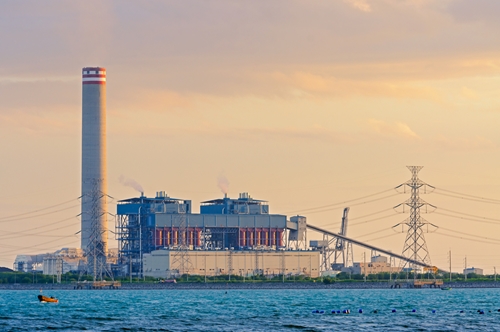
According to the EPA, when coal is burned for a power, carbon dioxide, sulfur dioxide, nitrogen oxides, and mercury compounds are all released into the atmosphere. Power plants have regulators that limit how much of each chemical are released into the environment. The EPA explained that on average 2,249 pounds per megawatt of carbon dioxide, 13 pounds per megawatt of sulfur dioxide, and 6 pounds per megawatt of nitrogen oxides are released by these plants. The agency noted that methane gas is also associated with coal from the mining or transportation of this fossil fuel.
The American Lung Association reported several other chemical components released during coal burning which have been linked to health issues. Methylmercury, which was initially regulated by this EPA regulation, is released from coal burning plants. It can make it into fish in the ecosystem and affect the human nervous system.
Other metals are released when coal is burned including lead, arsenic, nickel, selenium and chromium. These can affect various human systems as well as the plants, soil and wildlife near the plant. Hydrogen chloride, hydrogen fluoride, radium, uranium, benzene, xylene and formaldehyde are all also released, according to the ALA.