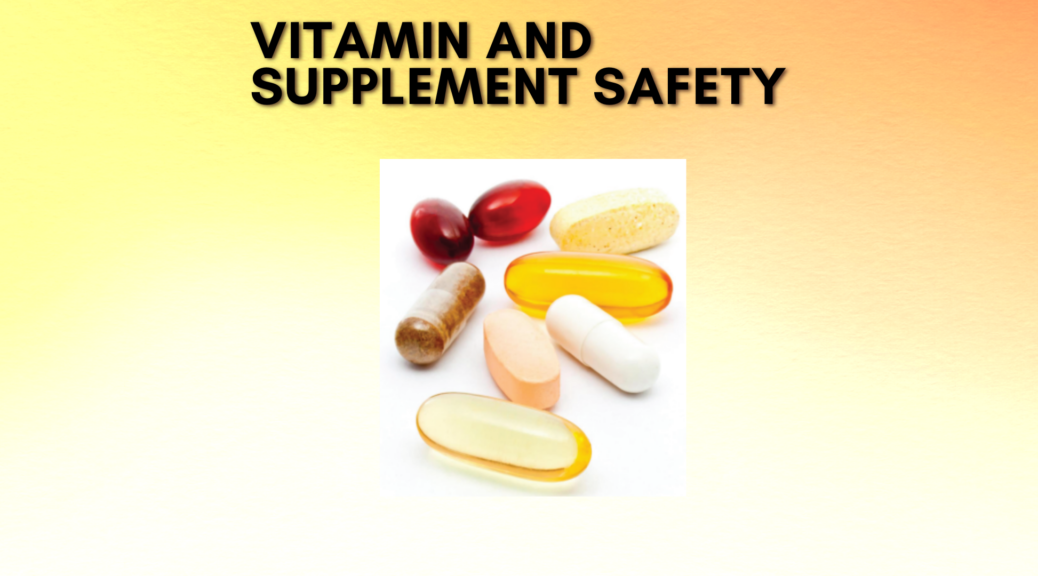
Vitamin and mineral supplements are taken to provide nutrients that are typically found in food but that the person may not be getting enough of to meet nutritional needs. In many cases supplements are referred to as multivitamins, and can be taken as pills, chewable pills, powders, or liquids. This post focuses on vitamin and supplement safety.
Are Vitamins Tested by the FDA?
The United States Food and Drug Administration is a federal agency that is responsible for regulating products that impact public health such as food products, drugs, medical devices, and cosmetics. The FDA does not, and is not authorized to, check, or review dietary supplements and vitamins before they are released to the public.
Do Supplements Need FDA Approval?
Manufacturers do not need FDA approval prior to releasing a product to the public. They only need to notify the FDA if the supplement contains a new ingredient, which will be reviewed for safety and not effectiveness, and will still not receive an official “approval”. The FDA can take a dietary supplement off the market though if they are found to be unsafe or if the product claims are false and misleading.
How do you know if a Vitamin is FDA Approved?
The FDA does not “approve” any dietary supplements or vitamins because they fall under a subset of the food category. The FDA does not “approve” food products, only pharmaceutical drug products.
How do you Test for Vitamin Safety?
Since vitamins are not subject to the same processes such as clinical trials to prove their effectiveness, purity, or marketing claims, it is important to make sure you are selecting the right one. When testing vitamins for safety, be sure to check:
The label to confirm that what is on the label is in the bottle
Toxicology to confirm product formulation
For contamination to ensure the product does not contain any undeclared ingredients or contaminants
How do you know If a Supplement is Trustworthy?
Supplements are a great way to add to a healthy lifestyle, but not all supplements are created equally. A supplements trustworthiness can be verified by:
- Purchasing supplements from a reputable source
- Looking for third party online verifications and reviews
- Purchasing organic herbal supplements
- Checking to ensure that your vitamin or supplement was tested using top analytical standards
What does NSF Certified Mean for Vitamins?
The National Science Foundation is a third-party testing organization that offers testing of dietary supplements. The NSF certification confirms the products ingredients and ensures there are no unlisted ingredients or impurities. It can be considered a good practice to check for the NSF mark on the product label when verifying the purity of a product but is not required for a quality vitamin.
How can Chem Service help Manufacturers Ensure Vitamin and Supplement Safety During Product Testing?
Manufacturers are responsible for ensuring vitamins and supplement safety, not the government or third-party testing companies. Chem service has over 50 years of experience of providing highly pure chemicals and continues to offer a wide variety of vitamin and supplement quality standards. As Chem Service manufactures more options to meet the growing need for quality standards, you can ensure we have top quality standards for our chemicals and testing options. Contact our experienced staff today to purchase the vitamins and supplement analytical standards for your testing needs.
Sources:
- Ashley Reaver, MS. “Are Your Supplements Safe? Here’s How to Tell.” Are Your Supplements Safe? Here’s How to Tell, blog.insidetracker.com/how-to-know-if-your-supplements-are-safe.
- Center for Food Safety and Applied Nutrition. “What You Need to Know About Dietary Supplements.” U.S. Food and Drug Administration, FDA, www.fda.gov/food/buy-store-serve-safe-food/what-you-need-know-about-dietary-supplements.
- “Supplement and Vitamin Certification.” NSF International, www.nsf.org/knowledge-library/supplement-vitamin-certification.
- “The FDA’s Role in the Supplement Industry.” Ritual, ritual.com/articles/the-fdas-role-in-the-supplement-industry.