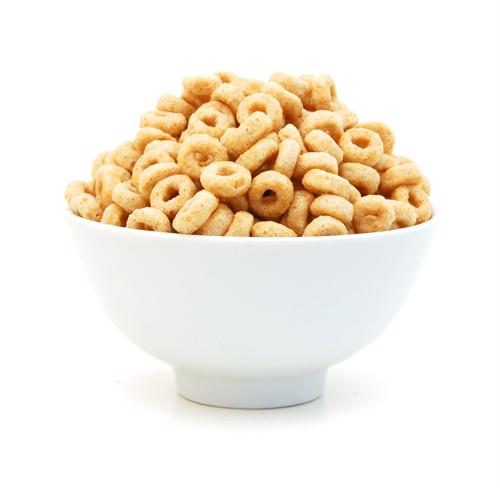
Parents are on high alert upon word that more than two dozen breakfast cereals – primarily geared toward children – have elevated levels of a potentially harmful chemical.
According to a follow-up report from the Environmental Working Group, 28 cereals contain the chemical known as glyphosate. The active ingredient in a variety of weed killers, glyphosate is the among the more common herbicides out there, primarily to induce growth among various kinds of plants. But as the International Agency for Research and Cancer has pointed out, the chemical may also have long-term health consequences when it leaches into the food supply, as the IARC has described glyphosate as "probably carcinogenic.
Ken Cook, president of the EWG, indicated that the makers of the problematic breakfast cereals have some explaining to do.
"How many bowls of cereal and oatmeal have American kids eaten that came with a dose of weed killer?" Cook exclaimed. "That's a question only General Mills, PepsiCo and other food companies can answer."
To arrive at its conclusions, the EWG worked in partnership with Anresco Laboratories. Together, they tested 10 samples of cereals produced by General Mills – primarily varieties of Cheerios – as well as 18 Quaker products, a company that's owned by PepsiCo.
Several cereals contain amounts well above EWG baseline
The biggest offender was Quaker Oatmeal Squares, the report said. Specifically, the cold cereal had nearly 2,840 glyphosate detects on a parts per billion basis. That's approximately 18 times the amount the EWG considers safe for kids to consume, or 160 ppb.
Cook says there's any easy way for General Mills and PepsiCo to solve this issue.
"If those companies would just switch to oats that aren't sprayed with glyphosate, parents wouldn't have to wonder if their kids' breakfasts contained a chemical linked to cancer," Cook stated. "Glyphosate and other cancer-causing chemicals simply don't belong in children's food, period."
The EWG is one of several consumer safety organizations that have called on food producers to cease and desist in the use of glyphosate. Americans have made similar entreaties, as over 156,000 people have signed a petition launched by the EWG called "Just Label It," which as its title implies, urges food manufacturers to be more forthcoming with their ingredient listings. Ben & Jerry's, Stonyfield Farm, Nature's Path, Happy FAmily Organics and Amy's Kitchen are among the major businesses that have asked the Environmental Protection Agency to be more strict in its allowance of trace amounts of glyphosate.
What the FDA found
The Food and Drug Administration, meanwhile, has performed some of its own testing on pesticides in food. It maintains that of more than 7,400 food product samples it analyzed – 6,946 for humans and 467 for pets and animals – nearly all complied with federal limits. Additionally, no pesticides whatsoever were detected in close to 53 percent of the locally grown human food samples – meaning within the U.S. – and close to 51 percent of imported foods.
Glufosinate, another weed killer that controls the growth of specific varieties like morning glories and hemp sesbania, was also tested by the FDA. Here, too, no "violative levels" were found in most of the crop types sampled, which included corn, soybean, carrots, sweet potatoes and radishes.
The allowable limit for glyphosate, according to the EPA, is 1.75 milligrams per kilogram of body weight. The EWG says it should be no higher than 0.01 mg.
Scott Gottlieb, FDA commissioner, stated he's confident that what amounts of glyphosate and glufosinate are in the food supply are harmless.
"Like other recent reports, the results show that overall levels of pesticide chemical residues are below the Environmental Protection Agency's tolerances, and therefore don't pose a risk to consumers," Gottlieb said.