In different bodies of water around the world, eutrophication is a major environmental concern. According to the U.S. Environmental Protection Agency, excessive levels of nitrogen and phosphorus in the water leads to algal blooms. Overpopulation of algae hurts the water quality by creating ripe conditions for bacterial growth and depleting the oxygen supply, creating dead zones where fish and other aquatic life cannot live.
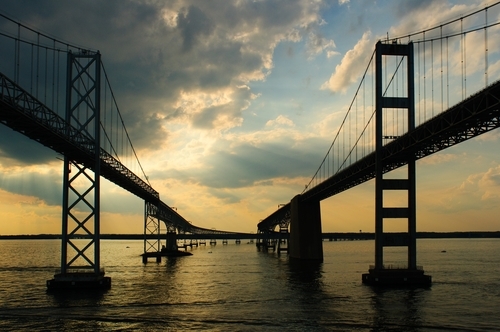
Although these nutrients may wash into the water as a result of the application of fertilizer and other chemical compounds on land, they may also come from natural resources. The ability to trace the sources of nitrogen and phosphorus can be pivotal to programs that help farmers and other businesses manage their use of these products. At the University of Delaware, one team of scientists is studying phosphorus pollution in Chesapeake Bay, which is the largest estuary in North America.
Pollution reduction was a priority since 2001
As a body of water, Chesapeake Bay is essential to diverse forms of life and has become a major focus of both federal and state land conservation efforts. However, about 70 percent of the estuary is impaired or polluted, according to the U.S. Geological Survey. Contaminants may run off from farms, industrial factories and households. Historically, common pollutants included heavy metals, polychlorinated biphenyls and pesticides. In recent years, flame retardants, personal care and cosmetic products and pharmaceutical waste have all contributed to contamination of Chesapeake Bay, as well. Additionally, environmental scientists have grown concerned about drilling projects to obtain natural gas from shale deposits.
In response to these problems, various federal and state agencies are collaborating on different projects that aim to assess the health of fish and wildlife, define sources of polluting chemical compounds and measure levels of nutrient pollution. Distinguishing human sources of nutrient pollution from natural sources will also be important.
Isotopic analysis may be key
Deb Jaisi, an assistant professor of plant and soil sciences at the University of Delaware, intends to take a closer look at the phosphorus problem in Chesapeake Bay. According to Jaisi, phosphorus in the estuary may be attributable to land-based pollution, natural ocean nutrients or old seafloor sediments that have become mobile once again. However, he believes that humans do not play as large a role as other scientists may think.
"The contribution of these three major sources of phosphorus has varied since colonial times," Jaisi said in a statement. "The prevailing notion that the increase in terrestrial phosphorus alone is the tipping point for the bay's eutrophication is questionable."
The phosphorus from these three sources will all be of different isotopes. To get a better understanding of where the phosphorus is coming from, Jaisi plans to use different laboratory tools to analyze the isotope ratios of sediment cores extracted from the seafloor. The isotopic signatures will provide information on where the phosphorus came from during different time periods.
"The strength of this work is that it applies the natural abundance of stable isotopes to 'fingerprint' the phosphorus sources for the first time in the Chesapeake Bay," Jaisi said in his statement. "We'll be able to see how much phosphorus is derived from the land versus from the ocean. Over time, the analysis will reveal the real culprit in the Chesapeake Bay's nutrient overenrichment."
Jaisi hopes the work of him and his colleagues will inform policies that are supposed to guide nutrient pollution management in Chesapeake Bay. This management may include nutrient maps of the estuary as well as the tributaries that feed into it. He will conduct this work with help from grants from the Oak Ridge Associated Universities.